The Role of Roll Cradles in Sustainable Supply Chains
Key Takeaways
- Material and Manufacturing Efficiency: Roll cradles utilize 100% recycled pre-consumer corrugated clippings, lowering energy use and sidestepping the chemical treatments and pest risks associated with wood or virgin packaging.
- Smart Engineering and Safety: A lightweight, one-piece moulded construction eliminates fasteners to protect workers from injuries while enabling nestable storage, secure double-stacking, and reduced shipping emissions.
- Strategic and Regulatory Compliance: Adopting these cradles ensures compliance with upcoming EU packaging regulations, protects cylindrical products from transit damage, and strengthens corporate ESG credentials.
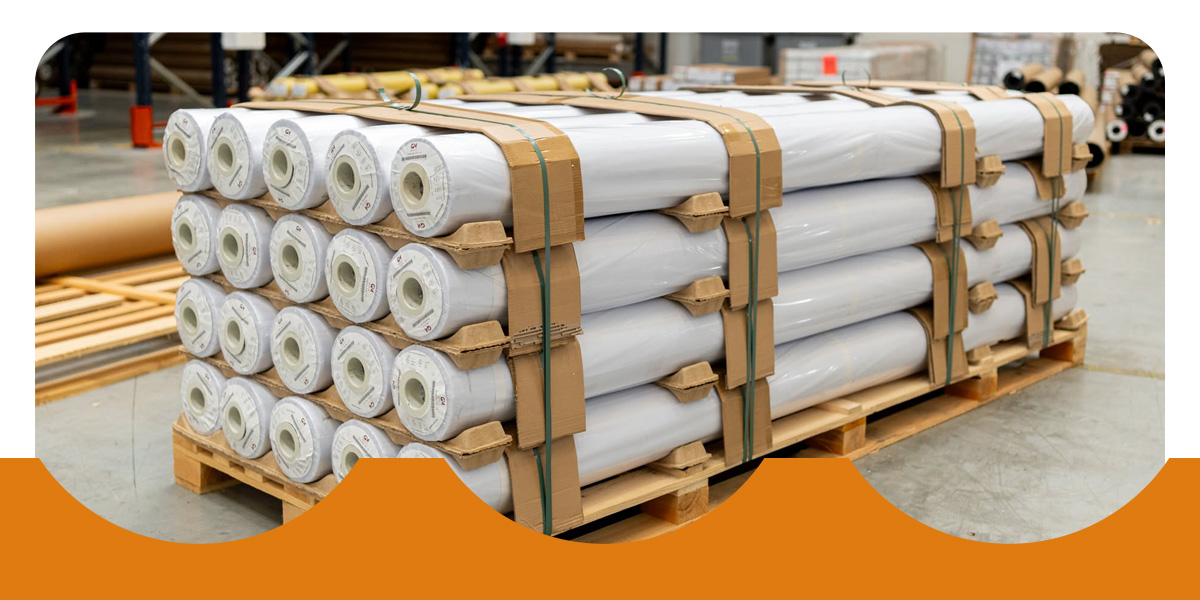
Sustainable supply chains require packaging that performs well beyond basic protection. Corrugated fibre pulp roll cradles address this challenge through their composition, their engineering and their broader impact on business performance.
Let’s look in detail at how each dimension contributes to greener logistics.
Roll Cradles’ Material and Manufacturing Advantages for Supply Chain Sustainability
The environmental advantages of corrugated fibre pulp roll cradles begin with the material.
Lowering Energy Use With Recycled Corrugated Clippings
Cutting and shaping corrugated cardboard generates waste. Workers collect this stray material and convert it into fibre pulp instead of sending it to a landfill or incinerator.
Compare this to fresh timber, which requires harvesting, transporting, pulping and multiple processing stages to transform it into usable packaging material. Producing new plastic is equally intensive and involves energy-heavy chemical refinements. Pre-consumer clippings skip most of these steps because they’ve already undergone one round of processing.
Simplifying End-Of-Life With 100% Recyclable Materials
Corrugated roll cradles contain only fibre pulp with no plastic coatings, chemical additives or composite layers added during manufacturing. Therefore, they’re fully recyclable through curbside collection. In 2024, every fibre in Europe completed an average of four recycling cycles. Other materials can’t match this recyclability.
- Plastic: The Packaging and Packaging Waste Regulation specifically targets plastic packaging for reduction. However, plastic recycling rates fall short of targets throughout the EU.
- Expanded polystyrene foam: Municipal recycling systems can’t process foam economically because of its low density and contamination challenges. The material ends up in landfills or incinerators, neither of which supports circular economy objectives.
- Wood: Wood is somewhat reusable, but moisture causes splintering and structural deterioration over time. Consumers produce approximately 20 million tons of wood waste annually, only 40% of which gets recycled.
Avoiding Chemical Treatments When Transporting Internationally
The International Standards for Phytosanitary Measures 15 mandates that wood packaging must undergo heat treatment or chemical fumigation before crossing international borders to prevent pest transfer between countries and from damaging ecosystems. The treatments are valuable, but they add costs and chemical exposure to supply chains.
Corrugated fibre pulp poses no pest risk, letting you skip heat and fumigation. Even if you ship to North America or the Asia-Pacific area:
- You keep fumigation chemicals out of the environment and ecosystems.
- You eliminate the energy consumption consequences of heat treatment.
- Substances such as methyl bromide never enter your supply chain.
- You avoid paying for specialised services or equipment.
- You don’t need to manage treatment certificates.
- Your warehouse workers don’t have to worry about chemical residues.
Smart Design Supporting Sustainability
The physical engineering of corrugated fibre pulp roll cradles builds on the material advantages to create additional environmental and operational benefits.
Improving Worker Safety and Recyclability With a One-Piece Construction
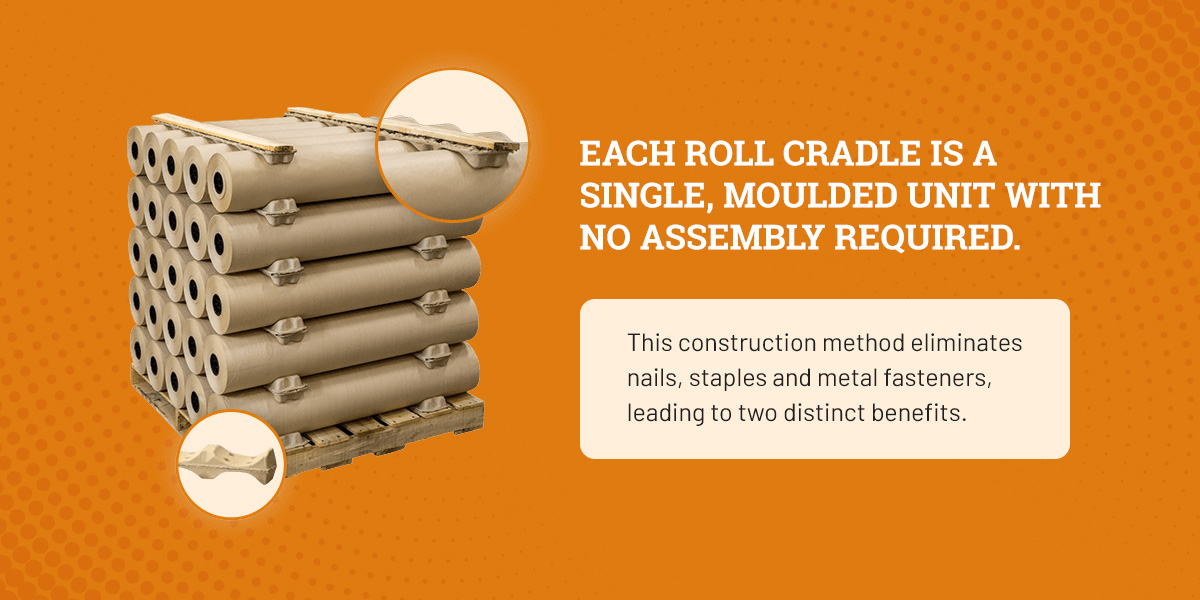
Each roll cradle is a single, moulded unit with no assembly required. This construction method eliminates nails, staples and metal fasteners, leading to two distinct benefits.
- Safer workplace conditions: Wounds and injuries like cuts, punctures and lacerations represent roughly 29% of all non-fatal workplace accidents across the EU. The fastener-free design prevents these.
- Simpler recycling processes: Metal components contaminate paper recycling streams and require separation at processing facilities, slowing recovery rates and sometimes leading to whole-batch rejections or downgrades.
Lightweight, Nestable, Stackable Design Shrinks Carbon Consumption
Roll cradles nest efficiently when empty and stack securely when loaded. Many applications allow safe double‑stacking, reducing the trips required to move goods by maximising the amount of product that fits in each lorry or shipping container. Fewer trips mean lower fuel consumption and reduced carbon emissions per unit delivered.
Because corrugated fibre pulp weighs far less than wood while still providing durable product protection, every shipment also benefits from a lighter load. Lower gross vehicle weight reduces the fuel consumption per kilometre travelled, further cutting carbon emissions on every trip your products take.
Strategic Benefits of Roll Cradles for Your Supply Chain
Corrugated fibre pulp roll cradles’ benefits connect to regulatory requirements, waste reduction objectives and competitive positioning.
Ensuring Compliance With EU Packaging Regulations
The EU PPWR sets specific requirements for recycled content levels and recyclability standards that apply across member states. It takes effect in mid-2026, mandating that all packaging be recyclable by 2030.
Fibre cradle supply chain solutions made from pre-consumer corrugated clippings already align with these requirements and are compatible with current recycling infrastructures. Adopting packaging that meets 2030 standards now lets you avoid scrambling to find compliant alternatives as the deadline approaches.
Enhancing Product Protection
When a product gets damaged during transit, the waste extends beyond the packaging. A roll that arrives with edge damage, core crushing or contamination represents wasted raw materials, manufacturing energy and labour from every production stage. Effective product protection prevents this form of waste. Fibre pulp cradles securely support cylindrical products by evenly distributing weight and preventing rolling or shifting that can damage roll edges and cores.
Strengthening Your Brand’s Reputation
Environmental, social and governance performance influences business relationships across multiple stakeholder groups.
- Customers evaluate sustainability practices when choosing suppliers.
- Investors incorporate ESG metrics into their assessments.
- Job candidates research eco-friendly goals before accepting positions.
Switching to packaging with visible, verifiable environmental credentials demonstrates commitment. Corrugated fibre pulp cradles that feed back into recycling systems give you the documentation and data that stakeholders increasingly request. You can show the percentage of recycled content in your packaging or demonstrate how materials flow back into recovery streams. This documentation supports customer sustainability audits, provides metrics for ESG reporting frameworks, addresses business-to-business partner requirements and shows employees that environmental objectives translate into operational changes.
Partner With Rollguard for a Sustainable Supply Chain
Your organisation’s sustainability targets matter to your customers, your stakeholders and your future growth. Achieving those goals means choosing packaging that reflects your values while supporting the efficiency and protection your operations require.
Whether you’re seeking roll cradles for warehouse storage or shipping cylindrical products internationally, we can help. Rollguard works with organisations throughout Europe to identify fibre cradle supply chain solutions tailored to their specific applications.
Explore your rolled product storage options made in Germany through our online configurator or reach out to the team directly to discuss your requirements.
Leave a Reply