Fibre Cradles vs. Pyramid Stacking — Complete Cost and Efficiency Comparison
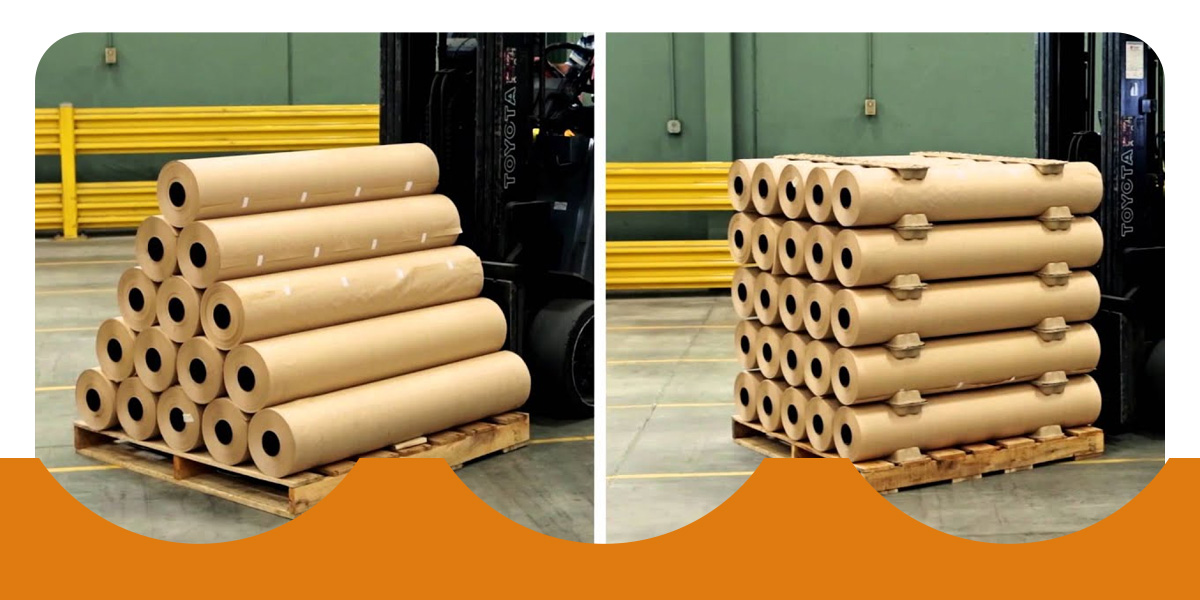
Manufacturers and distributors face a critical decision when storing and transporting cylindrical products like paper rolls, textiles or film. Pyramid stacking and fibre cradles appear similar on the surface but deliver drastically different results for your bottom line.
Pyramid stacking involves arranging rolls in triangular formations where products rest directly against each other. Fibre cradles are engineered packaging systems that provide individual compartments for each cylindrical product. While stacking is the traditional approach, it creates hidden costs that can compound across your supply chain. The latter is an alternative built on stability and efficiency. This comparison breaks down the real-world costs and operational impacts of each.
Roll Cradles vs. Pyramid Stacking Cost
Understanding the full financial picture requires examining three distinct categories. You must account for the up-front expenses of materials and logistics, the downstream losses from damage and the risk-related costs tied to safety and regulatory compliance.
Direct Costs — Materials, Storage and Shipping
Recycled fibre cradles use pre‑consumer corrugated clippings, giving the material a second life while keeping the cradle fully recyclable. These cost less than the combination of materials usually used in pyramid stacking arrangements, such as wooden chocks, foam inserts, plastic wrapping and additional securing materials. You purchase a single integrated solution rather than sourcing multiple components, reducing unit costs and procurement complexity.
Additionally, fibre cradles weigh less than the wood and supplementary materials used in pyramid configurations. Placing less structural load on warehouse floors and racking systems translates into lower storage costs. Shipping expenses also decrease because lighter pallets mean lower freight charges per unit. Carriers calculate rates based on total shipment weight, so reducing packaging weight allows you to ship more product for the same cost or pay less per delivery. Over thousands of shipments, these savings add up to measurable reductions in your operating expenses.
Indirect Costs — Product Damage
Pyramid stacking creates inherent instability because products rest against each other at angles. Even slight movement within a pyramid stack can cause rolls to crush adjacent items. A single shift can damage multiple products simultaneously, resulting in repercussions for your business.
- Returns, refunds and replacements: A single damaged delivery will force you to cover production and shipping costs twice, plus pay for administrative overhead for processing the entire cycle.
- Loss of customer confidence: Buyers waiting for products to fulfil their production schedules cannot absorb delays from damaged shipments. They may negotiate lower future prices or source from alternative suppliers who deliver reliably.
With fibre cradles, each cylindrical product sits in a dedicated, secure compartment. Rolls remain stationary and protected throughout handling and transport. Therefore, you avoid the costly cycle of returns, replacements and lost accounts that damaged deliveries create.
Customers who trust your delivery quality are more likely to award you larger contracts and refer you to partners in their network. This reputation for reliability opens opportunities with buyers who prioritise dependable suppliers over lowest-price options.
Risk-Related Costs — Workplace Safety and Regulatory Requirements
Pyramid stacking also increases your exposure to workplace incidents and regulatory penalties.
- Workplace safety hazards: Cylindrical products can shift during loading, unloading or transport, leading to accidents and injuries that trigger workers’ compensation claims, increase insurance premiums and cause operational downtime. Inadequate cargo securing contributes to up to 25% of lorry accidents across the EU. Fibre cradles’ stability reduces these workplace risks.
- Packaging and Packaging Waste Regulation compliance requirements: The PPWR mandates that all packaging be recyclable by 2030. Using nonrecyclable materials exposes your operation to financial penalties under the PPWR. Product recalls due to packaging failures add another cost dimension. Fortunately, 100% recyclable roll cradles align with these regulatory requirements.
Fibre cradles protect your business from unpredictable costs that can escalate quickly. Insurance providers may offer favourable premiums when you demonstrate commitment to safer handling systems. Meeting regulatory standards now also positions you ahead of competitors who will face rushed transitions as enforcement deadlines approach.
Efficiency of Roll Cradles vs. Pyramid Stacking
Cost analysis tells only half the story. Operational efficiency determines how quickly and reliably you can move products through your warehouse and supply chain.
Warehouse and Freight Density
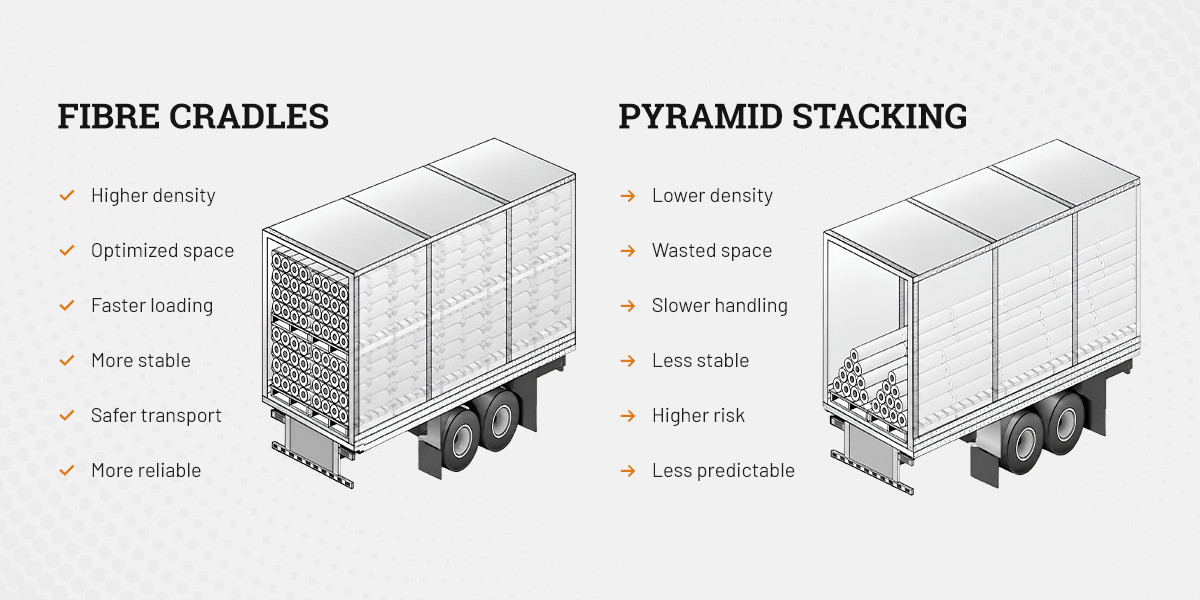
Pyramid stacking wastes valuable cubic space. The angled arrangement creates gaps and irregular shapes that are challenging to fill. Poor space use means you store fewer products per square metre of warehouse floor and ship less freight per lorry load.
Fibre cradles let you stack products in rectangular configurations that maximise all available dimensions. This optimised warehouse storage efficiency allows you to store more inventory in the same facility footprint and load more products per shipment. Higher density directly reduces storage costs per unit and freight expenses per delivery. When warehouse capacity increases, you avoid costly facility expansions or off-site storage fees.
Handling, Speed and Safety
Building a stable pyramid stack requires careful positioning. Workers must move slowly, repeatedly adjusting products to maintain balance. Moving completed stacks demands extra caution because instability increases the risk of collapse during transport.
On the other hand, one-piece fibre cradles streamline the entire palletising process. Workers can follow best practices for implementation quickly and confidently. The secure design allows staff to properly load and unload cylindrical items with ergonomic handling motions.
Forklift operators can move pallets at normal speeds because the stable cradle configuration eliminates concerns about shifts or collapses during transport. Faster processing means higher throughput with the same workforce. The stable configuration also improves safety, reducing injury risk and the associated downtime.
Simplifying Your Operations
When your packaging system is lighter, more stable and faster to implement, your entire supply chain becomes more predictable. Staff training is simpler because roll cradles for rolled products follow consistent procedures rather than requiring judgement calls about pyramid stack stability.
Inventory management improves when products remain secure and undamaged throughout storage and handling. Supply chain reliability increases as shipping damage rates decline and delivery schedules become more consistent. All in all, a simplified packaging process using fibre cradles reduces operational complexity across your organisation. The benefits of roll cradles extend from your receiving dock through final delivery to customers.
Partner With Rollguard for Fibre Cradle Solutions
When you analyse the complete financial and operational picture, fibre cradles emerge as the superior solution for European operations. Rollguard specialises in engineered fibre cradle systems designed for manufacturers and distributors across the EU. We make our 100% recyclable products in Germany to meet the demanding standards of supply chains.
Explore our roll cradle solutions to find the perfect configuration for your cylindrical products or contact our team today to discuss your requirements.
Leave a Reply