How to Reduce Packaging Waste in Your Warehouse
In 2023 alone, the European Union (EU) produced almost 80 million tonnes of packaging waste. This isn’t just a problem for the environment. Inefficient packaging directly impacts the bottom line of warehouses across the continent. It also leads to damaged goods and wasted floor space.
Luckily, your warehouse can address all of these problems by refining its packaging processes. You can save money in warehousing and make your facility more sustainable all at once.
Keep reading to learn how to reduce packaging waste in your warehouse.
The Cost of Inefficient Packaging
Packaging waste in your supply chain can lead to numerous problems. While they may seem small in isolation, they can have an enormous impact on your warehouse’s operations over time.
Four of the most common are:
- Financial drain: Inefficient packaging significantly increases your cost per package. For one, each box has to use more secondary packaging materials to ensure the object within is safe. That means your warehouse has to purchase more materials per year. The increased weight also leads to higher shipping fees per package. If a product is damaged because of inefficient packaging, your warehouse may also have to replace it. Over time, these minor costs can drain your budget.
- Negative environmental impact: Packaging waste can harm local ecosystems, pollute waterways and more. This is especially true of plastic packaging materials. Due to this issue, the EU has started to require sustainability reporting for certain companies. Failing to do so won’t just harm the environment — it can also harm your warehouse.
- Poor brand reputation: Wasteful packaging can impact your business partners’ feelings toward your brand. For example, more eco-conscious companies may feel that the packaging is unsustainable and end the partnership. Other partners may find that the secondary packaging materials can’t protect their items. If items are damaged, they may request a replacement or start looking for a new partner.
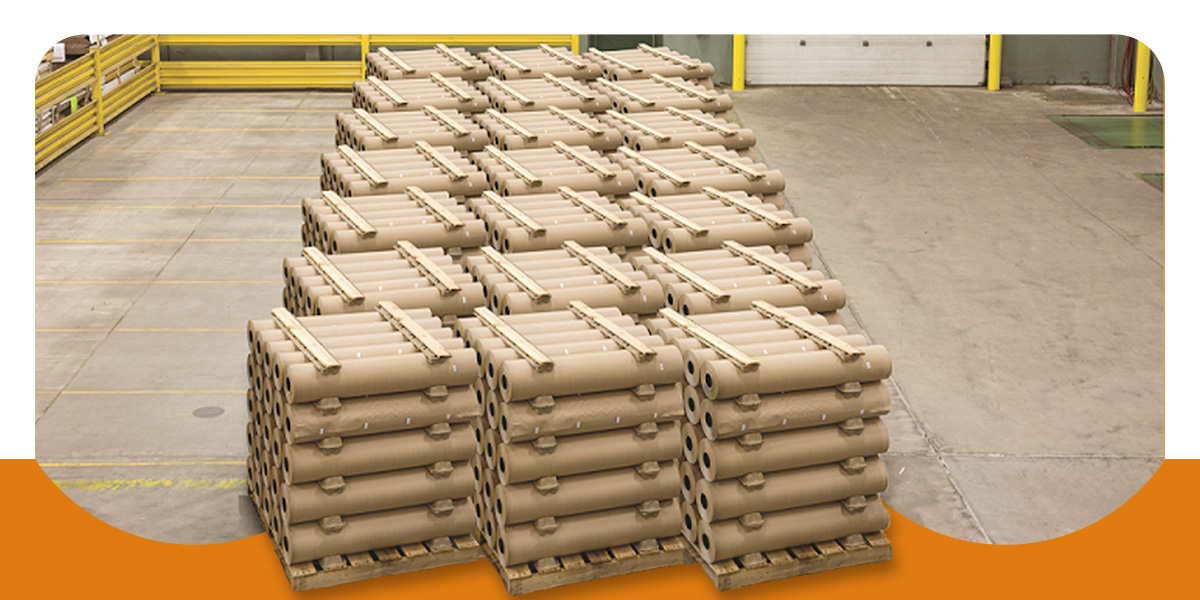
- Lost floor space: Inefficient packaging often takes up far more floor space than necessary. This can impede day-to-day operations and decrease your warehouse’s overall output. The commonly used pyramid stacking method can also lead to broken pallets and damaged items. Roll cradles from Rollguard can prevent these issues, protecting cylindrical packages and maximizing space via cube stacking.
Practical Strategies to Minimize Waste in Your Warehouse
Cutting waste in packaging isn’t always easy, but it can have a profound impact on your warehouse’s expenses and workflows. Here are four sustainable packaging tips that can transform your warehouse.
1. Audit Your Warehouse Waste
The packaging waste audit helps you identify and measure waste in your warehouse. Then, you can develop strategies to resolve those specific issues. Without the audit, though, your warehouse is essentially flying blind.
Typically, a waste audit has three stages:
- Observe and document: Walk the warehouse floor, taking photos and detailed notes on all packaging materials. This includes void fill and other secondary packaging materials. Include materials inbound from suppliers and outbound for customers. Make note of the different material types, their average weight and volume and their purpose.
- Quantify: Evaluate how much of each packaging material your warehouse is using in a month. You can do this by tracking the number of packages shipped and how much packaging material each one uses. You can also sort inbound waste into bins by type and weigh them. Your notes from the previous step will provide additional context and ensure no packaging material is missed.
- Analyze the data: Now that all your data is collated, you can identify specific areas of waste. For inbound waste, you might notice that a particular supplier is more inefficient than others. This can be a chance to find a more sustainable partner. For outbound waste, you might note that excessive amounts of void fill are being used for a particular product line. Your warehouse can then reduce the amount of void fill or find more efficient packaging.
2. Optimize Your Packaging Design
Void fill and other secondary packaging materials often compensate for packaging that doesn’t fit the items inside. Optimizing your packaging design can reduce this waste while also providing superior protection.
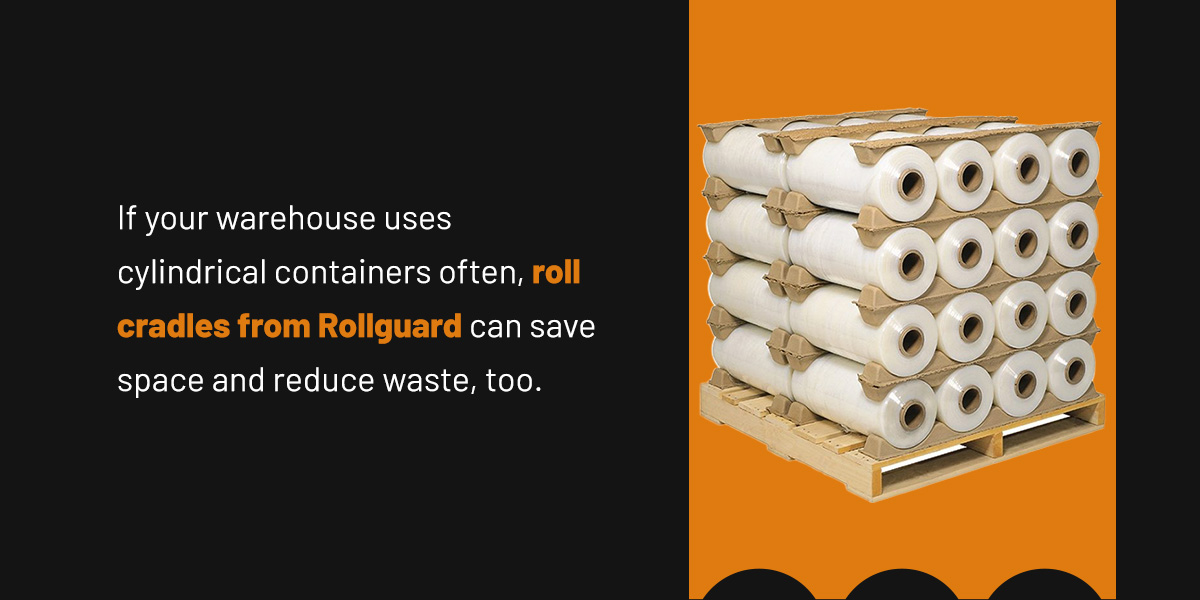
Many warehouses use box-on-demand systems or work with a supplier that offers a wide range of box types. Either method ensures that the packaging fits the item inside, reducing the need for internal cushioning materials. You can even adapt your tertiary packaging materials to match. If your warehouse uses cylindrical containers often, roll cradles from Rollguard can save space and reduce waste, too.
Other warehouses will look for ways to eliminate unnecessary packaging layers. For example, if an item is wrapped in plastic and placed in a box with void fill, can one of those layers be removed? Or maybe a different secondary packaging material can be used altogether. Either approach can reduce waste.
3. Choose Sustainable Packaging Materials
Changing the shape of your packaging isn’t the only way to reduce waste. Changing the materials themselves can also make your warehouse more sustainable.
Some of the most popular cardboard alternatives include:
- Molded pulp
- Mushroom packaging
- Air pillows made from recycled materials
Roll cradles from Rollguard are made from recyclable fibre. They have fewer components than many other tertiary packaging materials, and each one is produced with eco-friendly processes. They’re all curbside recyclable, too.
4. Establish a Robust Recycling Program
A warehouse-wide recycling program is one of the best ways to reduce inbound waste in your facility.
Start by placing color-coded recycling bins with clear signage throughout the warehouse. They should be in the most convenient locations possible, where folks won’t have to travel far to use them. They also need to be emptied regularly to make sure they’re always available for use.
Advanced waste reduction like this is only possible when warehouse teams opt in. You can promote proper recycling practices by training employees during onboarding. You can also offer a crash course to all employees when your warehouse first implements a recycling program.
Partner With Rollguard to Reduce Waste and Save Space
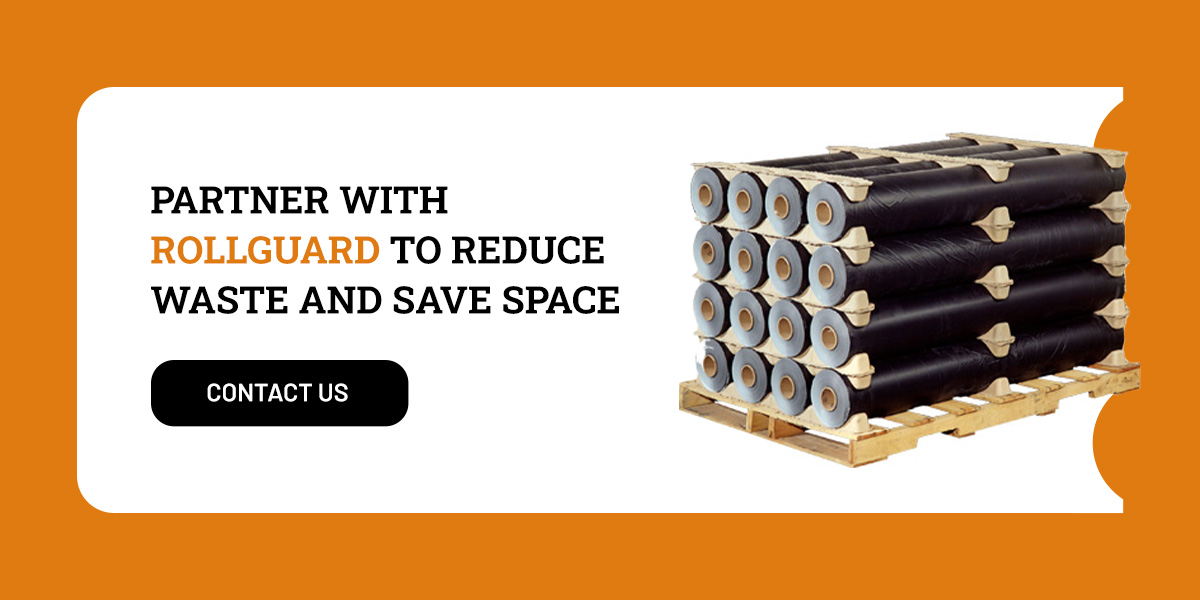
If your warehouse is looking for a better way to transport cylindrical or roll packages, Rollguard is the way. Our fully recyclable roll cradles can be configured to fit your exact needs. They can accommodate one large roll, nine small rolls and everything in between. No matter the number or material, your packages will receive high-quality protection built just for them. The cradles are also nestable and can be cube stacked, maximizing your warehouse’s space and output.
To see what Rollguard can do for your warehouse, request a sample today or call us at 00 1 920-997-6340.
Leave a Reply