Cradles vs. Plastic: Environmental Impact
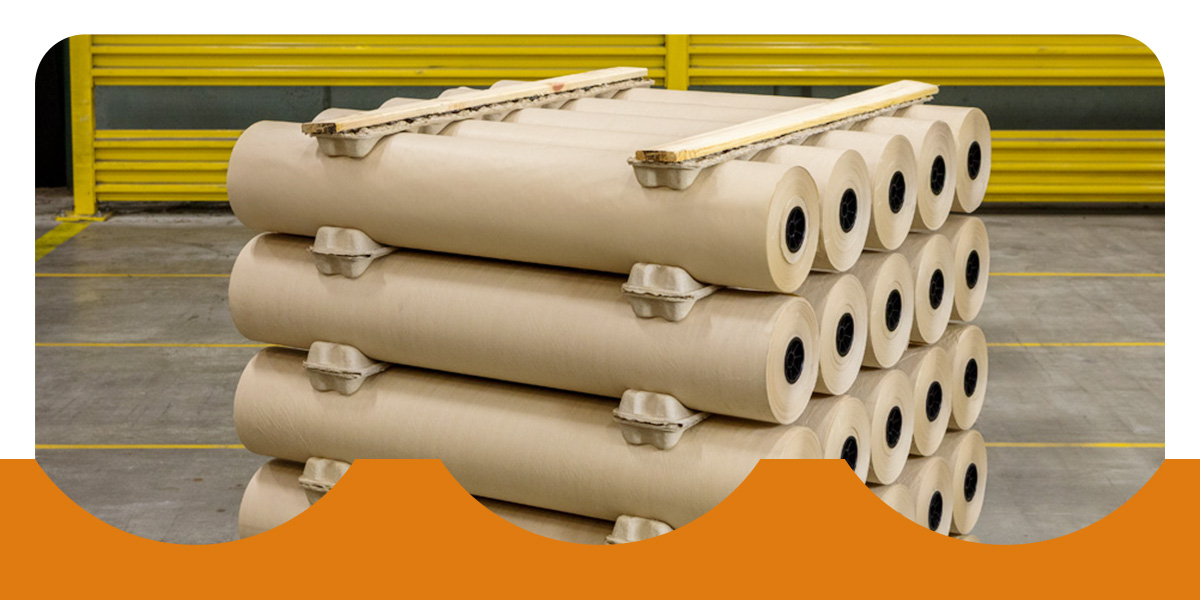
Selecting packaging for cylindrical and roll goods is a priority under the EU’s Packaging and Packaging Waste Regulation (PPWR). Compared to plastic packaging, Rollguard’s moulded fibre cradles offer a cleaner, more cost-effective way to stabilise roll goods, streamline operations and stay compliant with PPWR.
Our Approach to Sustainability
This comparison guide covers key environmental and operational factors to help teams make compliant decisions.
1. Life Cycle and End of Life
When comparing the environmental impact of cradles versus plastics, the clearest differences appear at the end-of-life stage. Fibre cradles are widely recycled, while many plastics are not accepted locally and often become waste.
Fibre Cradles
Rollguard’s fibre cradles are single-material, thick-walled moulded fibre made from recycled corrugated pulp and are fully recyclable. Notable features include:
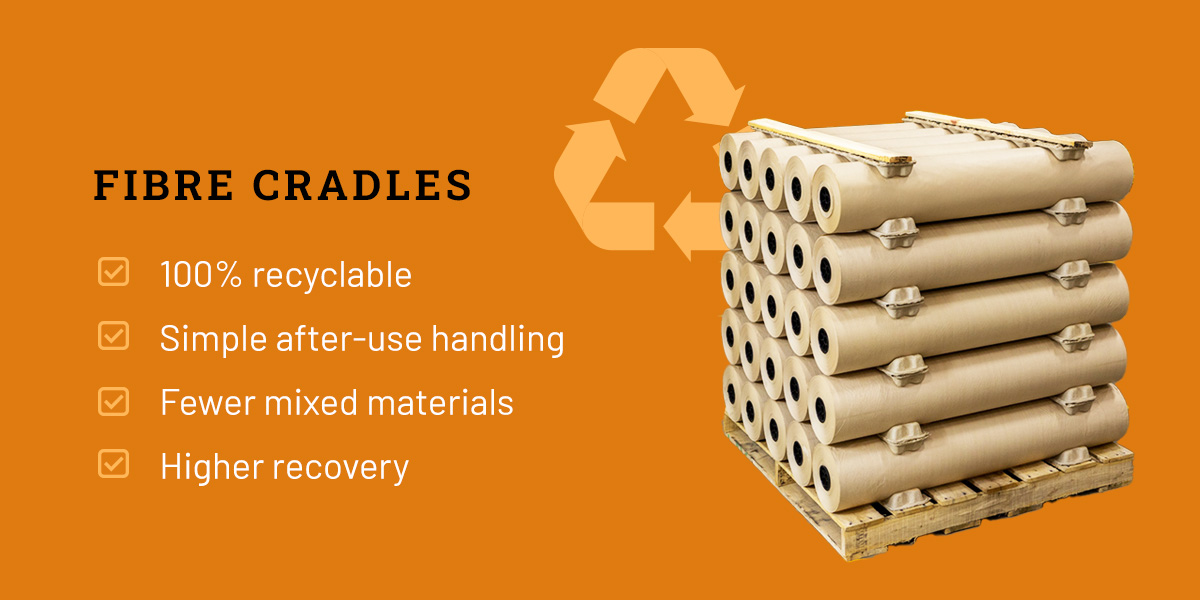
- 100% recyclable: Cradles can go in standard kerbside recycling in many EU countries, with no need to separate parts or remove coatings.
- Simple after‑use handling: Receiving teams can remove the cradle and place it directly in recycling without cutting away foam, film or extra components.
- Fewer mixed materials: The one-piece design avoids plastic inserts, tapes or foils that often require disposal as waste.
- Higher recovery: Municipal systems across Europe routinely recycle fibre-based packaging, increasing the chance that cradles are recycled instead of landfilled or incinerated.
- Lower contamination risk: Cradles have no loose foam or film scraps to contaminate recyclables or cause load rejections.
- Lower disposal costs: More packaging is recycled instead of sent to the landfill, reducing disposal fees and handling costs.
- Easier compliance: Mono‑material construction and clear recyclability simplify PPWR documentation, supplier scorecards and customer audits.
- EU‑made and locally sourced: Rollguard’s fibre cradles are made in Germany with local materials, reducing transport distance and improving life cycle performance.
Plastics
Plastic packaging options for roll goods often run into practical end‑of‑use barriers that raise costs and complicate compliance. The common challenges of plastic solutions include:
- Sorting and identification: Different resins and colours require precise sorting. Mixed loads are hard to separate and often get discarded.
- Foam realities: Expanded polystyrene is bulky, brittle and lightweight, making it costly to collect and compact. Many facilities do not accept it without special take‑back programs.
- Films and wraps: Stretch and shrink films tangle sorting equipment and are often excluded from mixed recycling, usually requiring clean, separate collection.
- Local acceptance varies: Collection and processing vary by location, so a plastic component may be recyclable in one place but waste in another.
- Higher handling costs: Cutting away foam and film adds labour, requires extra bins, and increases dock congestion and storage.
- Residual waste fees: 430 million tonnes of nonaccepted plastics increase landfill and incineration costs, and rejected loads can add unexpected haul-back fees.
- Audit complexity: Claims of “technically recyclable” are hard to prove without local acceptance, increasing PPWR documentation work.
2. PPWR Implications
The PPWR favours packaging that is clearly recyclable, uses the least amount of material needed and is easily verifiable.
Fibre Cradles
Simple, mono-material designs like Rollguard’s fibre cradles help teams achieve compliance with less administration. Clear labelling and mono-material construction simplify audits. They make it easier for customers’ compliance teams to review, approve and keep records. Additionally, compostable standards are more stringent than ever, and you must prove they work under set conditions.
When comparing cradles and plastics, fibre cradles offer a simpler way to meet these rules. They are single-material, easy to remove and accepted by many municipal recycling programs in Europe. This lowers noncompliance risk, reduces disposal complexity and speeds up documentation for you and your customers.
Plastics
About 40% of plastics in the EU are used in packaging, which accounts for 50% of marine litter. The PPWR has set targets for a 35% reduction in plastic packaging by 2030 and a 65% reduction by 2040.
As the regulation takes effect, recycling and minimisation rules will cover more packaging types. Regulators and customers now expect proof that materials are actually recycled, not just listed as recyclable. You must show that your packaging is collected and processed where you operate.
3. Material Impacts
Life cycle assessments (LCAs) often name different “winners” when comparing cardboard and plastic. This depends on the product, the use case and local waste systems.
Fibre Cradles
Cardboard and paper production impacts the environment through biodiversity loss, high energy and water use and greenhouse gas emissions. For roll packaging, system efficiency usually matters more than the base material. Designs that minimise empty space, use fewer parts and have a clear end-of-use pathway perform better in cost and impact.
This means choosing packaging suited to roll logistics. Rollguard’s moulded fibre cradles are one-piece, sized for stable stacking and easy handling. This reduces material use, avoids unnecessary components and simplifies removal. These system-level improvements often matter more than small differences in raw material footprints.
Sourcing and manufacturing also matter. Rollguard cradles are made in the EU with local materials, reducing transport distances and supporting Scope 3 reporting.
Plastics
Plastics manufacturing in the EU causes greenhouse gas emissions, air pollution, waste and a high risk of water contamination. Only about 9% of all plastics produced have been recycled — the rest remain in use, landfills or the environment, including oceans.
There is no universal “best” material. The best choice is the one that reduces waste in your operation and can be recycled where you ship. Start by assessing real-world performance, including material use, roll protection, and how easily it can be handled and recycled at the destination. Finally, consider policy and market risks. As the PPWR takes effect, many plastic solutions face stricter scrutiny and changing local acceptance, leading to compliance issues and unexpected fees.
4. Operational Advantages
Your choice of materials either raises or lowers the risk of noncompliance and directly impacts daily operations.
Fibre Cradles
Fibre helps in the following ways:
- Damage reduction: Contoured support stabilises rolls, prevents shifting, and protects edges from damage during transit and storage. Layer-by-layer stability reduces top-load failures, especially in tall loads. Lower damage rates mean fewer claims and write-offs, improving ESG performance and cost metrics over time.
- Nesting and freight: Nestable cradles save warehouse space, allowing more inventory without extra room. Optimised trailer use and double-stacking move more product per trip. Less void fill and fewer SKUs simplify purchasing and speed packing. Fewer trips and lighter packaging lower fuel use and emissions per unit.
- Labour and safety: Fibre cradles accelerate packing and unpacking, with more consistent results and less need for rework. No nails or staples translates to cleaner workflows compared to wood-based assemblies, lowering injury risks. Fewer tools and steps reduce training time, improve standardisation and support peak-season ramp-ups.
Plastics
The main operational advantages of using plastic packaging for businesses include:
- Durability: Plastic’s strong polymer chains make packaging highly durable and resistant to breakage, corrosion and water damage, reducing the risk of damage and spoilage during transit.
- Shelf life: Plastic tamper-evident seals and modified atmosphere packaging protect products from deterioration and contamination, increasing shelf life and reducing food waste.
- Hygiene and safety: Plastics can be sealed automatically and are ideal for sensitive products like medicines and food. They meet strict EU safety standards, and their shatterproof nature eliminates the risk of dangerous shards.
- Cost-effectiveness: Plastics are quick and inexpensive to produce, making them cost-effective for many manufacturers.
That being said, plastic packaging contributes significantly to pollution and landfill waste. Fibre cradles offer a superior alternative due to their eco-friendly nature.
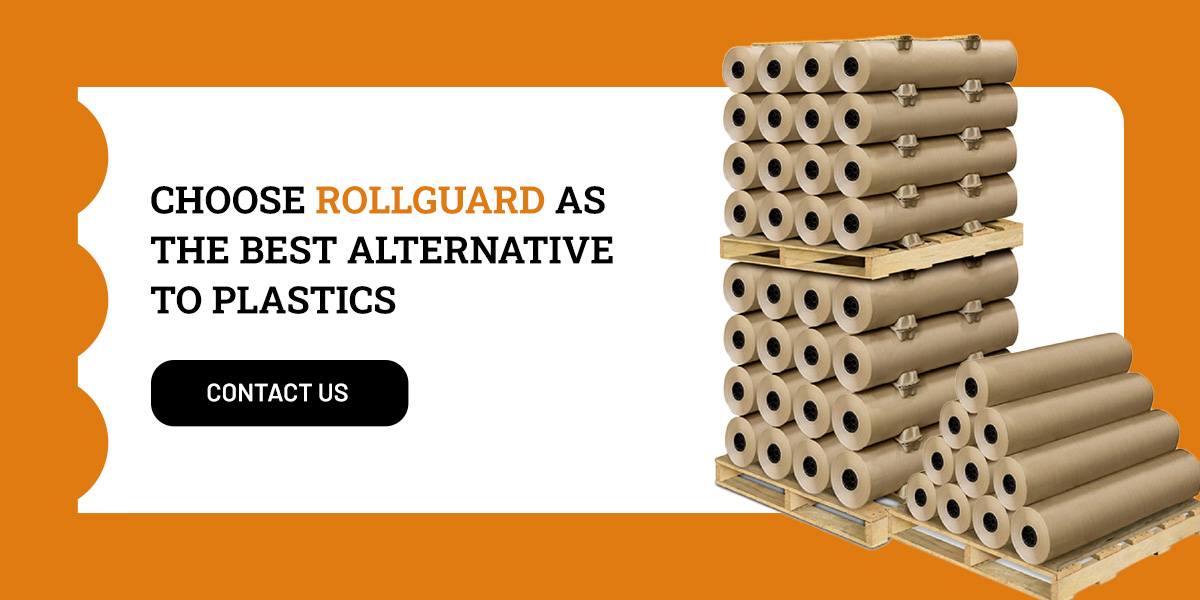
Choose Rollguard as the Best Alternative to Plastics
When considering fibre cradles versus plastic and their environmental impact, choose the option that lowers waste, costs and compliance risk.
Request a free Rollguard fibre cradle sample today, or contact a team member to discuss how sustainable cradles can benefit your business with savings from fewer damages, faster handling and smarter freight.
Leave a Reply